
The Bear Market is Dead
After months of pitiful price action, it is easy to be surprised by the strength in crypto markets in August. But the signs were there. Long-term holders were accumulating, Bitcoin had stopped responding to negative news, while some of the major drivers of the previous bull market - Bitcoin ETFs and Strategy - were capitulating. Sellers were becoming exhausted and the conditions were in place for a decisive shift in sentiment.
We believe that the decisive recovery puts the eight-month bear market to bed. At Sound Money, we have been fully allocated for the past two months. Not because we predicted that Scott Bessent would loosen financial conditions, but because the evidence suggested that a bitcoin bottom was forming.
It is telling, however, that the eventual strength was triggered by further policy intervention to loosen financial conditions. Policymakers themselves capitulate time and time again when faced with the consequences of tighter financial conditions. This gets to the heart of our thesis at Sound Money and the value proposition of non-state monetary assets like Bitcoin.

Bear Markets Never Repeat But They Rhyme
Bitcoin bear markets have historically followed a similar pattern:
Euphoria creates fragility. The seeds of the bear market are sown during the euphoria of the bull, when confidence is high and everyone is a genius. Longer-term holders tend to reduce their holdings when markets are frothy, leaving a greater portion of supply in the hands of recent buyers who have weaker conviction.
Falling prices create their own narrative. Eventually sellers outnumber buyers and price weakens. Recent buyers don't necessarily have a foundational view of the asset they hold and can quickly sell in the face of losses. Understandable concerns emerge on newswires as the rationale for the weakness, creating further selling pressure.
Capitulation exhausts the sellers. Price weakness puts pressure on bad decisions made during the previous period of euphoria, creating forced sellers while numerous others capitulate. Eventually, those willing or forced to sell have largely done so. Bad news continues but Bitcoin stops responding. Price settles into a narrow range, volatility grinds lower and disinterest and apathy take hold.
Positioning becomes fuel for the reversal. Those who remain bearish see the continued negative news as confirmation of their view and build short positions. But with sellers already exhausted, it doesn't necessarily take much to move price higher. Eventually something shifts, shorts are forced to cover and conditions suddenly appear remarkably different.
This cycle touched on all those notes:
Digital Asset Treasury companies got ahead of themselves in 2025 during the euphoria of 2025, while long-term holders reduced exposure.
Quantum fears emerged as Bitcoin fell below $100K, reducing conviction amongst some holders. Quantum is an understandable risk, but importantly, the news flow followed the price weakness.
Bitcoin crashed below $60K in June and July as Strategy (formerly know as “MicroStrategy”) became an effective forced seller, needing to raise capital to cover future dividend obligations.
Bitcoin ETFs capitulated alongside Strategy, recording their largest outflows on record in June and July.
Eventually, Bitcoin fell into a narrow trading range and it seemed almost impossible to find reasons why it would ever recover again — "why does anyone even own this thing anyway!
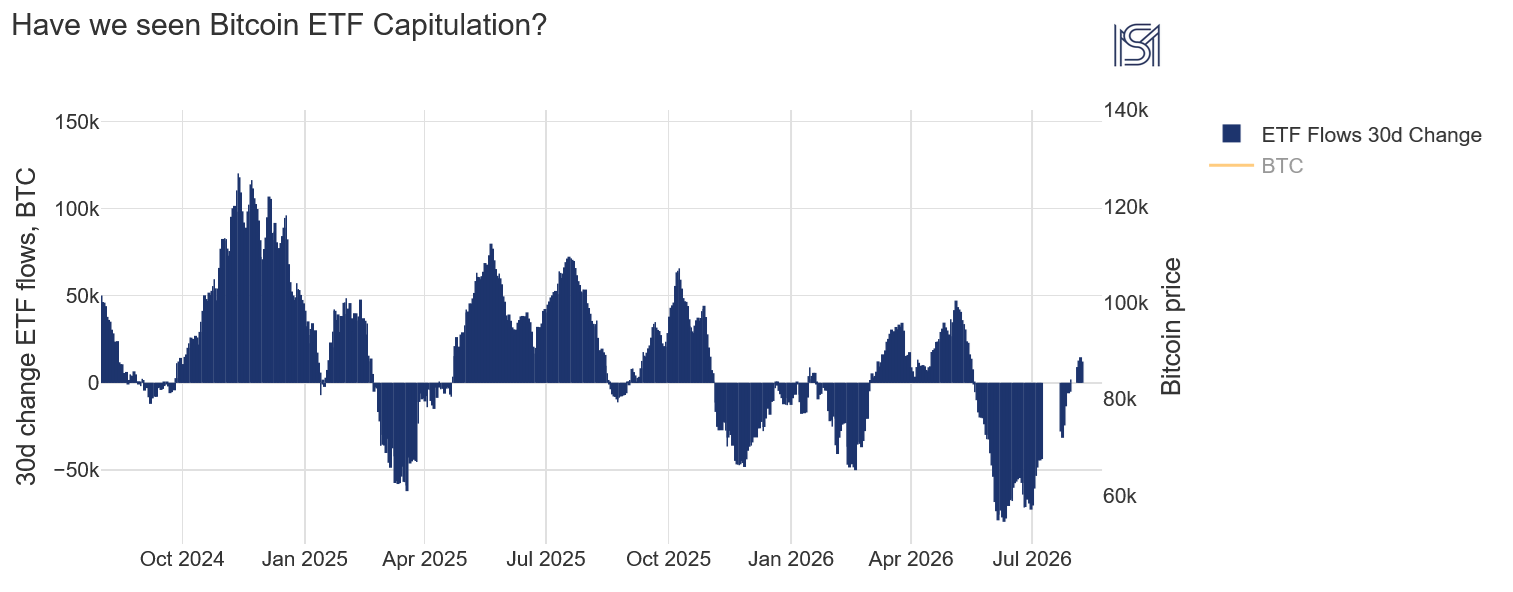
We said in our August investor letter: "A significant volume of Bitcoin has changed hands between $60–65K, suggesting that substantial selling is being absorbed at these levels. This suggests to us that a base is forming. Yes, there is a fair amount of selling at current levels, but this appears to be from recent buyers who we view as weaker hands, suggesting capitulation. The percent of supply held by long-term holders is close to record highs, suggesting the smart money is accumulating...the body of evidence continues to suggest that we're in a bottoming process. We believe Bitcoin presents compelling value at these levels."
During recent quarters, clients often asked us, "what are the catalysts to get us out of this bear market?" We don’t think bear markets end because of external catalysts. They end because sellers become exhausted. We did not predict that Bessent would put the debasement trade back on the table in August. But by then the conditions were in place for a rally.
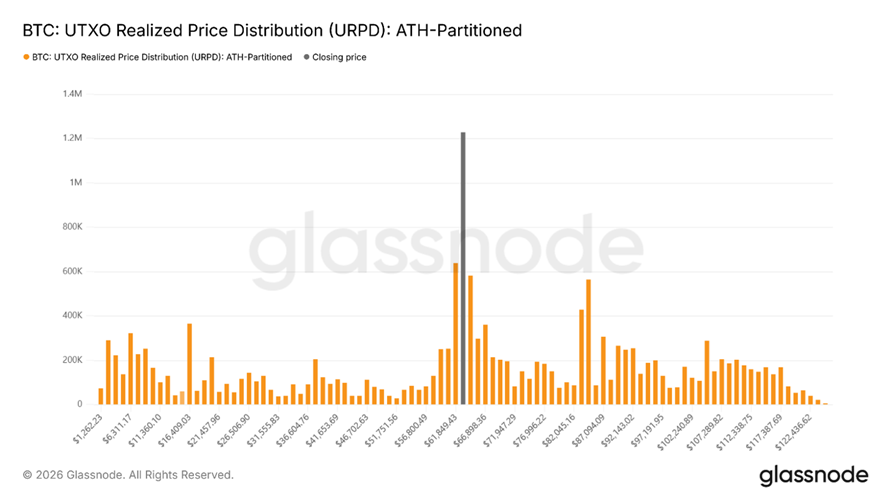
Realised Price Distribution, as of 18 August 2026
“Nothing Stops This Train”
"Nothing stops this train" is a term coined by Lyn Alden to describe why sustained loose fiscal and monetary policies are inevitable, which we referred to in our September 2025 Investor Letter. Treasury Secretary Scott Bessent made this point as clear as day in August.
The Treasury has started to buy back old, illiquid, long-dated bonds and replace them with short-dated T-bills. In simple terms, the Treasury is reducing the supply of long-dated bonds available to investors, putting downward pressure on long-term interest rates. This matters because long-term rates influence borrowing costs and the discount rates investors use to value assets. Lower discount rates support asset prices and loosen financial conditions. The message is clear: the administration is uncomfortable with long-dated interest rates and we should expect further intervention if yields rise. In other words, the market can now anticipate additional loosening. This is particularly noteworthy because Bessent was highly critical of Janet Yellen for pursuing a similar policy.
Bessent (or any other policymaker for that matter) might not want to liquify financial markets. But put them in the hot seat and their perspective changes quickly.
Policymakers cannot stomach higher bond yields. Interest payments as a percentage as a government expenditure are already uncomfortably high. So government bond issuance has shifted to the front end of the curve where the Federal Reserve can keep rates somewhat anchored. The implication is continued pressure to keep real yields low, ultimately at the expense of the currency. Scarce assets will benefit, particularly monetary assets like gold and bitcoin.
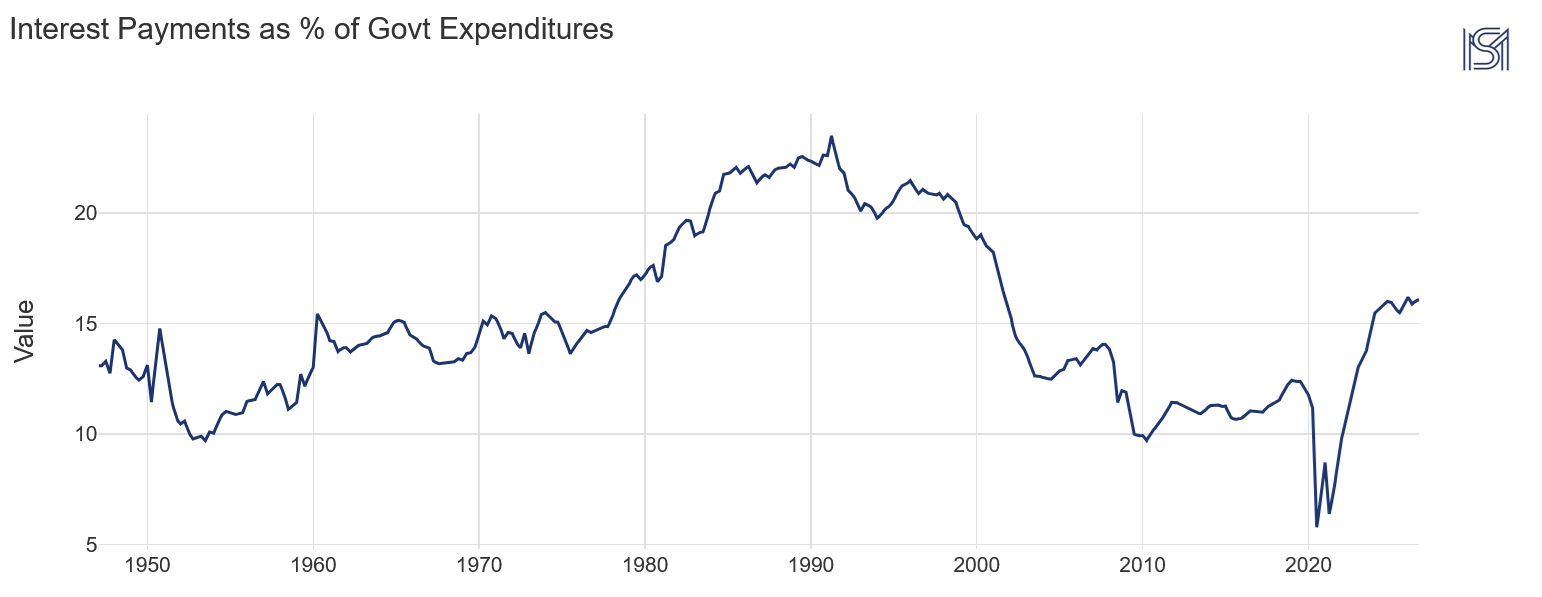
Therein lies a KEY component of the Sound Money thesis. While there is no short-term alternative to the current monetary system, we have to contemplate what comes next and invest in alternative monetary technologies.
The Bear Market is Dead
While Bessent's actions clearly triggered the recent strength, an aggressive short-squeeze accelerated the move. Bears had built up short positions during the consolidation between $60-65K. Price strength caused them to cover their shorts. On August 19th we experienced the largest daily short liquidations since early 2021. Liquidations turned the shorts into forced buyers, which lead to the reflexive dynamic where price strength begot further strength.
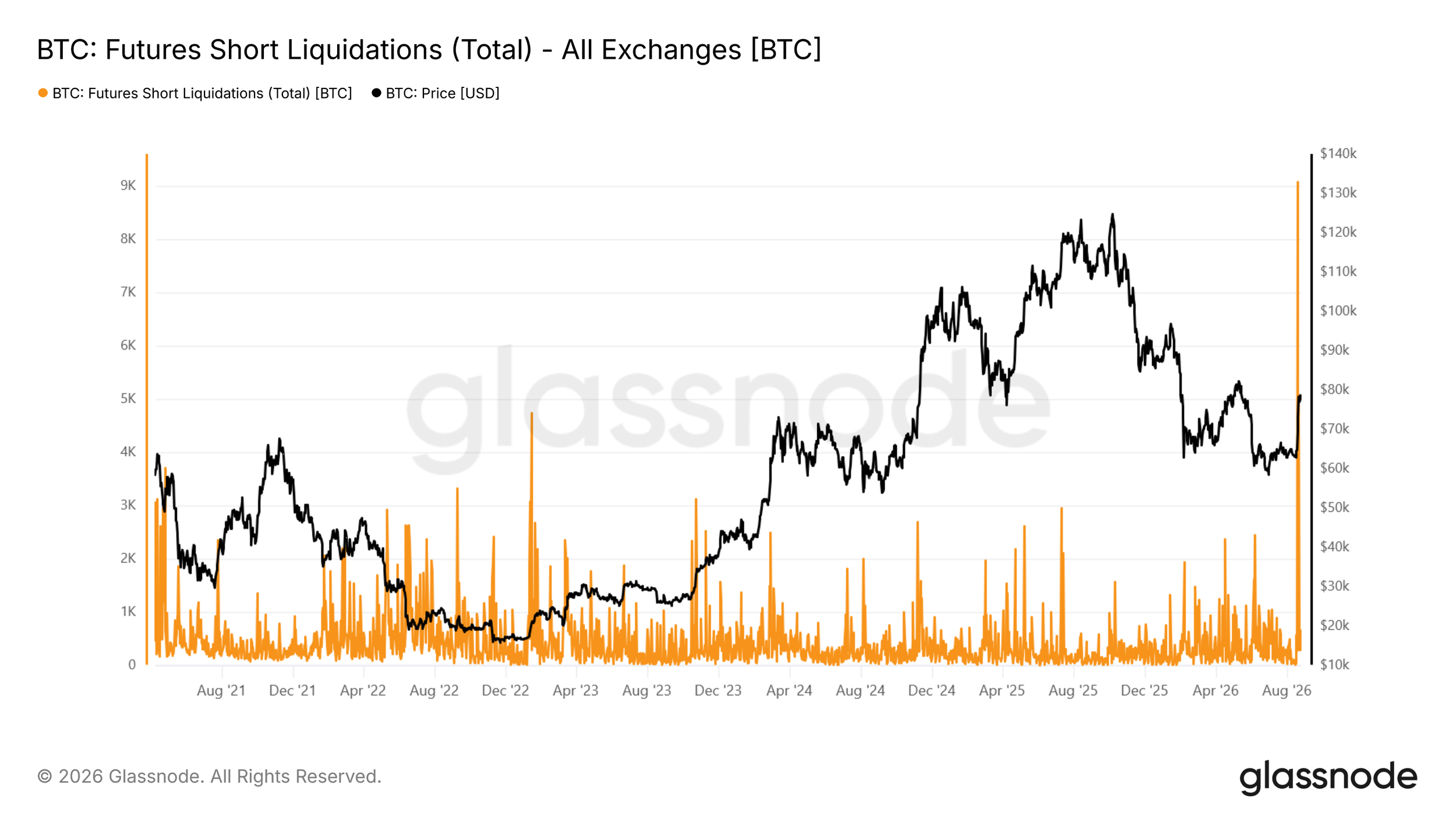
Just like sudden price weakness can break the back of the bull market, sudden price strength can suddenly and decisively shift the sentiment of the bear.
The short-term holder cost basis serves as resistance during bears, and support during bulls. It acted as resistance in May when bitcoin ticked briefly above $80K. That Bitcoin has shot aggressively through this level is stereotypical of late stage bear markets. It would be highly unusual if we came back to revisit $70K. In fact, the STH cost basis is already rising now, signalling new spot buyers have emerged. This is important because it reaffirms that the price strength is not merely short-covering.
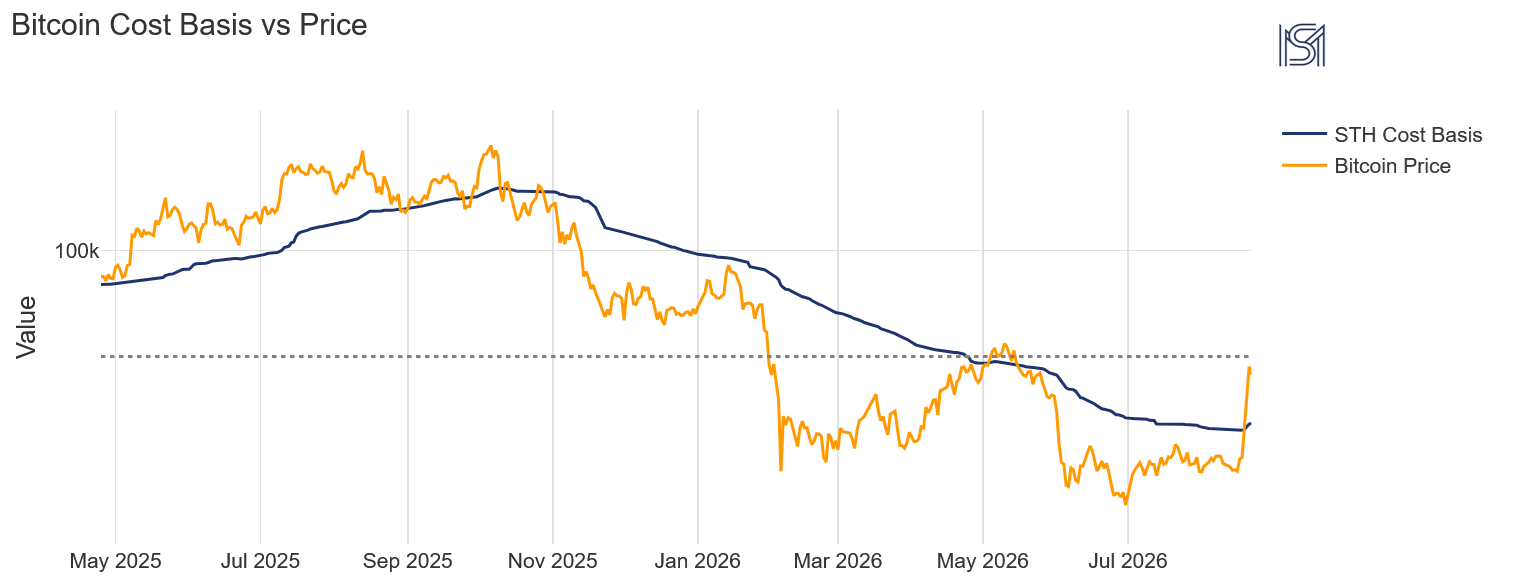
Technically, we got a weekly close above $66K, decisively reclaiming previous resistance. Purely from a technical perspective, this suggests that we could find ourselves in the $90Ks in the months ahead.
Markets never offer certainty. But the weight of evidence has shifted sufficiently that we now believe there is a very high probability the bear market is over.
% of Portfolio Allocated > Price Targets
I am not here to sell hopium and provide outlandish future return expectations. But I know the question you want answered: “what are our high-level expectations for the next 12 to 18 months?”
The reversal on the weekly and monthly suggests to us that a 50% reversal of the bear market is likely in the coming months. That puts the $90K area firmly in view. Until then, we will be watching leverage and funding rates closely to assess whether exuberance is creeping back into the system.
Further out, after reclaiming prior high time-frame resistance, Bitcoin has historically taken around 12–18 months to return to previous all-time highs. Those highs are still roughly 60% away. History never repeats perfectly, but if it rhymes, there is still meaningful upside on the table over the next 12–18 months.
Nothing is guaranteed by any stretch of the imagination. There will be corrections and gut checks along the way. Bitcoin's volatility has declined, but it remains an ever-present feature of the asset.
More important than any price target is the question: what percentage of your portfolio do you want allocated to alternative monetary assets like Bitcoin and crypto?
1%, 5%, 10%, 20%? Figure out what that number is for you and manage your allocation around that level.
That is far more important than trying to trade in and out of the market. That is what we do.
After eight months of weakness, it was easy for some to question the relevance of Bitcoin and the broader crypto ecosystem. Yet, just as sellers became exhausted, policymakers once again demonstrated why alternative monetary assets matter in the first place. The price outlook has improved materially, but the long-term thesis never went away.
